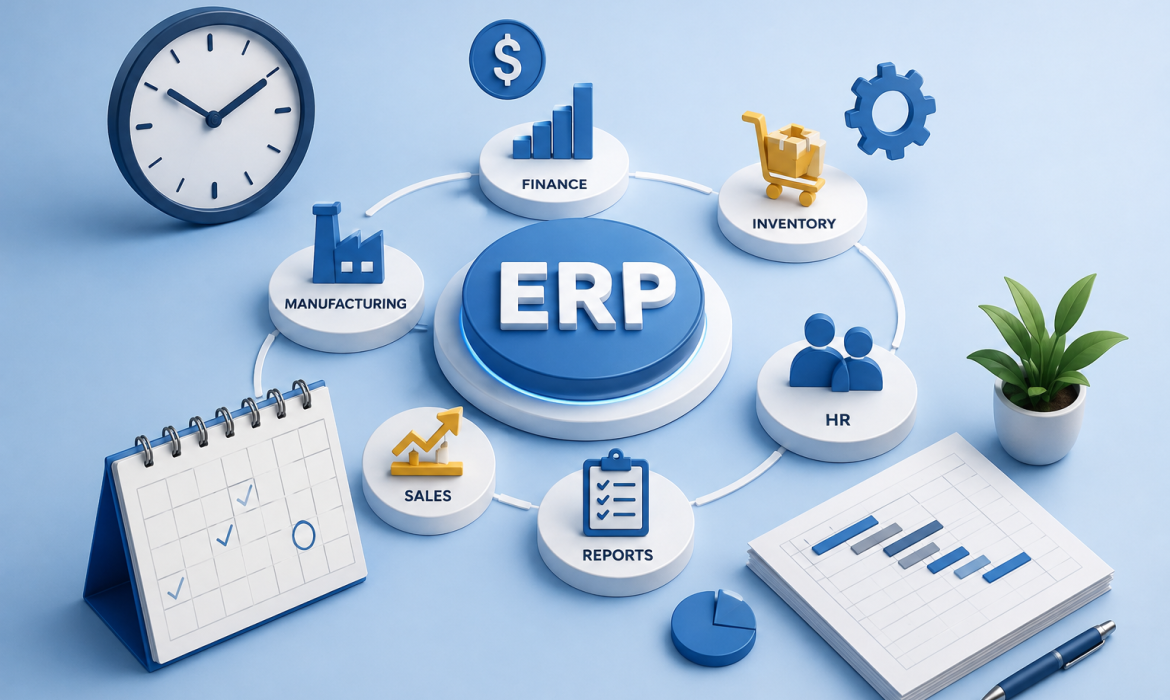
Implementing an Enterprise Resource Planning software is one of the big steps a business can take to improve its daily base operations. An ERP system helps manage all different business steps such as finance and customer management from one page.
One of the most common questions businesses ask before starting an ERP project is, “How long does ERP software implementation take?” The answer depends on several factors, including the all size of your business, the number of modules, database migration, more customization and employee full training. While every project is different, most ERP implementations take anywhere from 3 to 12 months.
Let’s understand what affects the implementation timeline and how businesses can complete process of successfully.
What is ERP Implementation?
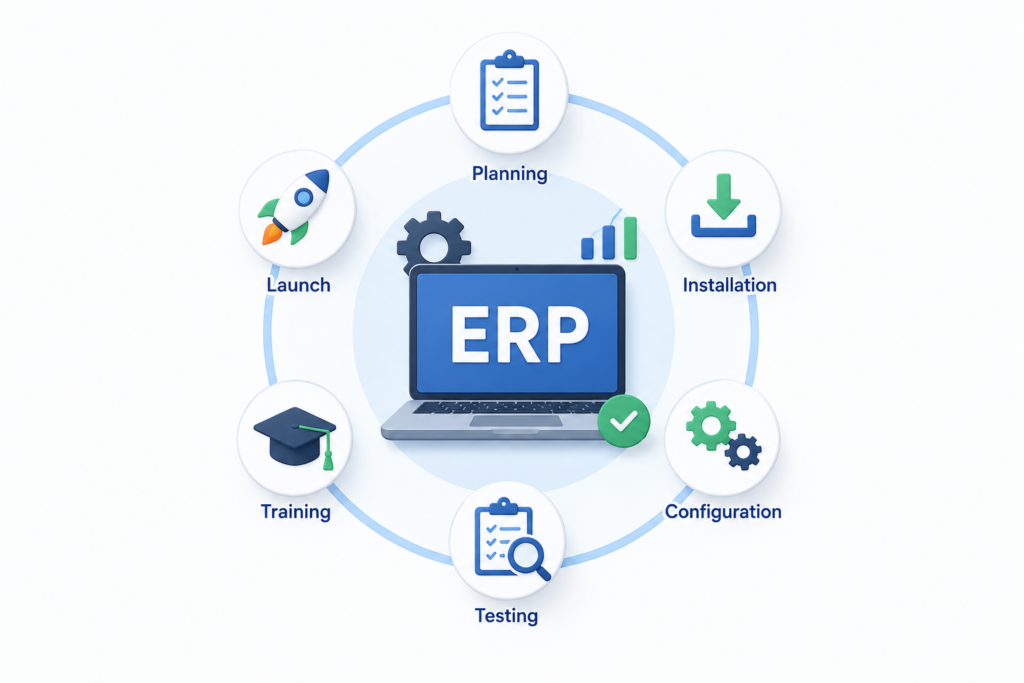
ERP implementation is the complete process of planning, installing, configuring, testing and launching an ERP system within an best organization. It also includes transferring existing business details, training work employee and ensuring every department can use the system efficiently.
A success ERP implementation is not just about installing online software—it is about improv the way a business works.
Typical ERP Implementation Timeline
Although every business has different needs, a standard ERP implementation usually follows these plan:
- Planning and Requirement Analysis: 2–4 weeks
- System Design and Configuration: 4–8 weeks
- Data Migration: 2–6 weeks
- Customization and Integration: 4–10 weeks
- Testing and Quality Assurance: 2–4 weeks
- Employee Training: 2–4 weeks
- Go-Live and Support: 1–2 weeks
For a small business, implementation may take around 3 to 6 months, while medium and big organizations may require 6 to 12 months or long depending on project complexity.
Factors That Affect ERP Implementation Time
1. Business Size
The size of your complate organization has a direct impact on implementation time.
Small businesses usually have fewer processes and users, making implementation fast.
Medium businesses need planning and all department coordination.
Big enterprises often need multiple modules, locations and integrations, increasing the timeline.
2. Number of ERP Modules
The more modules you implement, the longer the project may take.
For example:
- Finance
- Inventory Management
- Human Resources
- Sales and CRM
- Purchase Management
- Manufacturing
- Payroll
Implementing all modules together naturally requires more planning than deploying only finance and inventory.
3. Data Migration
Moving database from old software or online spreadsheets into the new ERP system takes time.
Businesses need to:
- Clean old data
- Remove duplicate records
- Verify accuracy
- Import customer, supplier, employee, and inventory information
Poor-quality data can delay the entire project.
4. Customization Requirements
Many businesses need ERP online system to match their existing workflows.
Examples include:
- Custom reports
- Approval workflows
- Dashboard development
- Industry-specific features
- Custom forms
The more customization required, the longer the implementation process.
5. Third-Party Integrations
Many companies connect ERP software with other business tools such as:
- CRM software
- Accounting software
- E-commerce websites
- Payment gateways
- Barcode systems
- Attendance systems
Building and testing these integrations adds extra implementation time.
6. Employee Training
Even the best ERP system won’t deliver good results if employees don’t know how to use it.
Training helps staff understand:
- Daily operations
- Report generation
- Data entry
- Workflow management
- Dashboard usage
Proper training reduces mistakes and improves user confidence after the system goes live.
7. Testing Before Go-Live
Before launching the ERP system, businesses should test every process carefully.
Testing usually includes:
- User login
- Inventory transactions
- Sales orders
- Purchase orders
- Financial reports
- Payroll processing
- Approval workflows
Fixing issues before launch helps avoid business disruptions later.
Tips to Complete ERP Implementation Faster
A well-planned project can save both time and money. Here are some useful tips:
- Define clear business target before starting.
- Select the best ERP solution for your business.
- Prepare clean and accurate data.
- Limit unnecessary customizations.
- Involve every department in the planning process.
- Train employees early.
- Test the system thoroughly before launch.
- Work with an experienced ERP implementation partner.
Benefits of Proper ERP Implementation
Better Business Efficiency
ERP automates routine tasks and less manual work, helping teams complete work faster.
Improved Data Accuracy
All business infor is stored in one central system, reducing duplicate entries and problem.
Faster Decision-Making
Real-time reports and main boards help manage make informed business decisions more fast.
Better Team Collaboration
Departments can easy share details, improving communication and workflow.
Higher Customer Satisfaction
Faster order processing, better inventory management and accurate information lead to improved customer full service.
Business Growth
A properly implemented ERP software supports future more expansion without operational challenges.
Common ERP Implementation Mistakes to Avoid
- Starting without proper planning
- Choosing software that doesn’t fit business needs
- Ignoring employee training
- Migrating inaccurate or incomplete data
- Excessive customization
- Skipping system testing
- Setting unrealistic project deadlines
Avoiding these mistakes helps ensure a smoother implementation.
Conclusion
ERP implementation is a best valu investment that helps businesses improve efficiency, streamline operations and make good decisions. While implementation timelines vary depending on business all size and project complexity, most well organizations can expect the process to take between 3 and 12 months.
Careful planning, clean database, complate employee training and expert guidance can make the implementation fast and more successful. If your business is plan to adopt an ERP system, partnering with an experienced technology company can simplify the full journey.
Scrupulous Technology provides more customized ERP solutions designed to match your business. From planning and implementation to training and ongoing support, our employee helps businesses successfully deploy ERP systems that improve productivity, reduce manual work and support long-time grow. Contact us today to start your ERP transformation journey.