Businesses collect a lot of users info all time. This can include customer contact details, past purchases, website activity and support requests. But simple having this information is not enough. Businesses need to understand what the database is telling them.
This is where CRM analytics becomes useful. CRM analytics helps businesses study customer and sales data to understand buying patterns, improve sales strategies plan and make best decisions. Instead of relying only on assumptions, businesses can use real customer understand what is working and where improvements are need.
What is CRM Analytics?
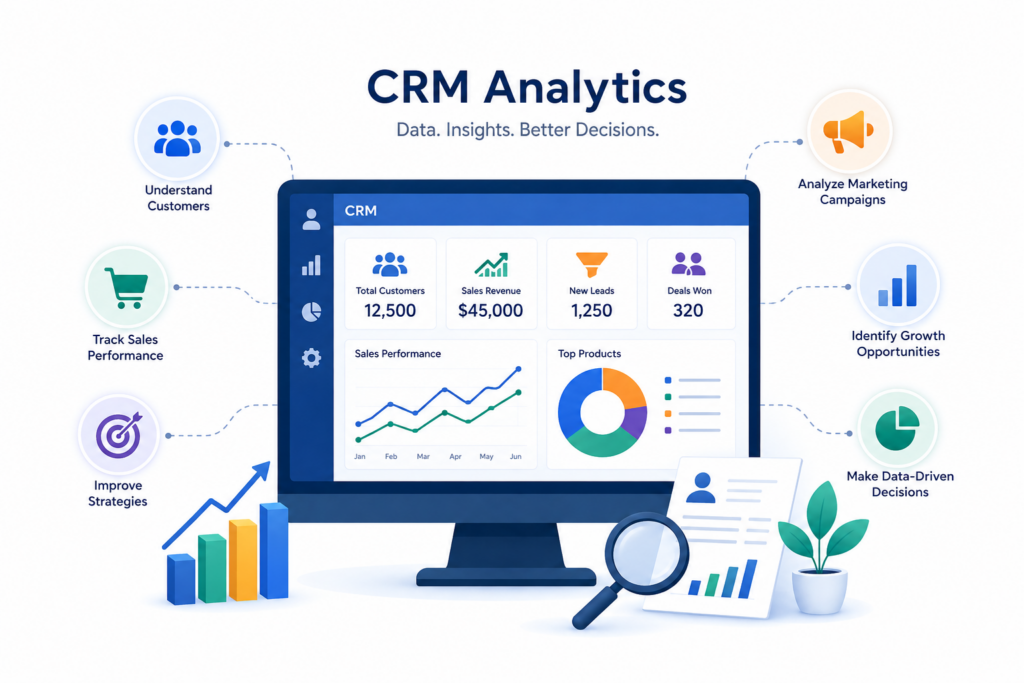
CRM analytics is the process of collecting and analyzing customer info stored in a CRM system. It works businesses understand customer need, sales performance and other important business activities.
For example, a company can use CRM online software analytics to find out which all products customers buy most often, which marketing campaigns generate leads and which sales representatives are clos more deals.
With these insights, businesses can make best all decisions and create plan to increase sales.
How Does CRM Analytics Work?
CRM analytics brings customer information together and turns it into useful business insights.
The main areas of CRM analytics include:
Customer Data Analysis: Understanding customer full details and interactions.
Sales Analysis: Tracking sales work, revenue, deals and sales targets.
Lead Analysis: Finding out which leads are more likely to become paying more real users.
Customer Behavior Analysis: Studying how customers connect with products, services, websites and sales teams.
Performance Reports: Creating reports and dashboards to help managers understand business work.
Forecasting: Using past sales info to estimate future sales and business opportunities.
Benefits of CRM Analytics for Your Business
Understand Your Customers Better
CRM analytics helps businesses more understand what customers want and how they make purchasing best decisions. By looking at past purchases, customer interactions and preferences, businesses can create more relevant offers and communication. When customers feel that a business understands their needs, they are more likely to stay connect.
Find Better Sales Opportunities
Not every lead has the same value. CRM system analytics can help sales teams identify that are more likely to convert. For example, if a customer has visited your website, requested product information and spoken with your sales, that customer may be more ready to make a new purchase. Sales working teams can focus their time on these high-potential leads instead of treating every lead in the same way.
Improve Sales Performance
CRM analytics gives managers a clear view of how their sales employess team is performing. Businesses can follow important data such as the number of leads, deals lost, sales revenue and conversion rates. This helps managers identify what is working well and where the sales process needs improvement.
Create More Personalized Offers
Customers do not all have the all same needs. CRM data can help businesses understand customer full interests and purchaseing all. For example, an online shop can recommend related products based on what a customer has purchased before. Similar, a service company can send offers based on a customer previous needs. Personalized communication can improve customer engagement and create more sales opportunities.
Improve Customer Retention
Getting a new customer is important, but keeping existing old customers is equally valuable. CRM software analytics can help businesses identify customers who may be losing interest. By studying customer activity, purchase day to day, complaints and interactions, businesses can take action before customers leave. Simple actions such as personalized offers or better customer support can help build stronger relationships.
Make Better Business Decisions
Without database, businesses often make decisions based on assumptions. CRM analytics provides useful information that can support better decision-making. Businesses can understand which products are performing well, which sales channels are bringing customers, and which areas need more attention. This allows business owners and managers to make decisions based on actual customer and sales information.
Improve Sales Forecasting
CRM analytics can also businesses estimate future sales. By reviewing previous sales performance, seasonal trends and customer demand, businesses can create more realistic sales forecasts. Better forecasting can help businesses budgets, sales targets and resources more effectively.
How CRM Analytics Can Increase Sales
CRM analytics can support sales growth in several practical ways:
Identify High-Value Leads: Focus sales more efforts on new leads that have a chance of conversion.
Track Customer Journeys: Understand how user move from their first buying product.
Find Sales Trends: Identify products or periods that generate other more sales.
Improve Follow-Ups: Use customer move and previous conversations to plan timely follow-ups.
Personalize Communication: Send relevant offers and sales based on full customer needs.
Reduce Lost Opportunities: Find out why leads are not converting and improve the sales.
Measure Results: Track sales and offers activities which strategies are generating best results.
Tips for Using CRM Analytics Effectively
Keep Customer Data Updated: Make sure customer idetails is accurate and updated daily.
Track the Right Metrics: Focus on useful all metrics such as conversion rate, sales revenue and lead best quality.
Use Simple Dashboards: Create easy to more understand main boards so work teams can fast view important info.
Review Data Regularly: Analyze CRM software reports daily instead of checking them only when problems occur.
Connect Sales and Marketing Data: Combining details from sales and marketing can provide a understanding of the full customer journey.
Take Action on Insights: Data is only useful when businesses use it to improve their full strategies and customer experience.
Conclusion
CRM analytics helps businesses turn customer data into useful information that can support more sales and business good decisions. It can help companies understand customers, identify good leads and add customer retention.
For businesses that want to grow in a competitive market, using customer data effectively can make a orignal difference. A well-managed CRM software combined with useful analytics can help sales teams work smart and build more stronger customer relationships.
If you are looking for a reliable CRM solution for your business, Scrupulous Technology can help you choose and implement answer that support customer management, sales tracking, reporting and business grow. Contact Scrupulous Technology today to improve the way your business manages customer details and sales.