Mobile apps have become an important part of all day life. People use applications for shopping, banking, communication, entertainment, booking all cservices and much more. Because users expect apps to be fast, simple and reliable, developers need best ways to connect different systems and srvices.
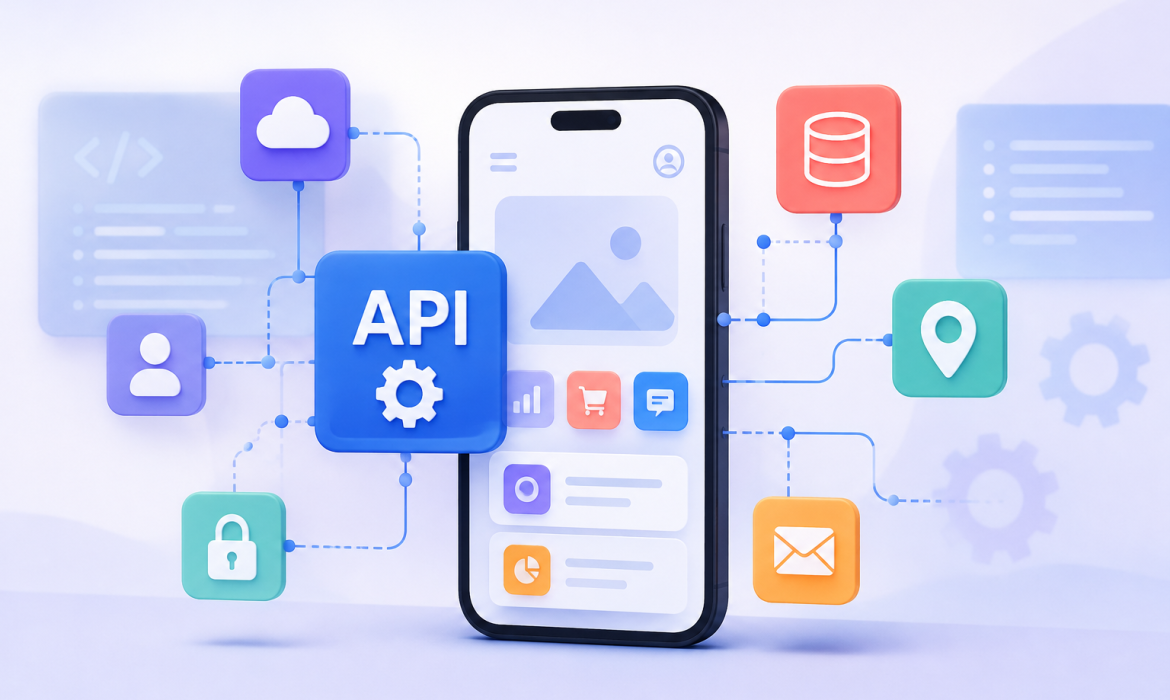
This is where APIs become useful. APIs allow a mobile app to communicate with servers, databases, payment process, maps and other software. Instead of building every feature from scratch, developers can connect an app with existing services through APIs.
For businesses, APIs can make mobile app development simple and easy to maintain.
What is an API?
An API is a communication method that allows two different software systems to exchange details and work together.
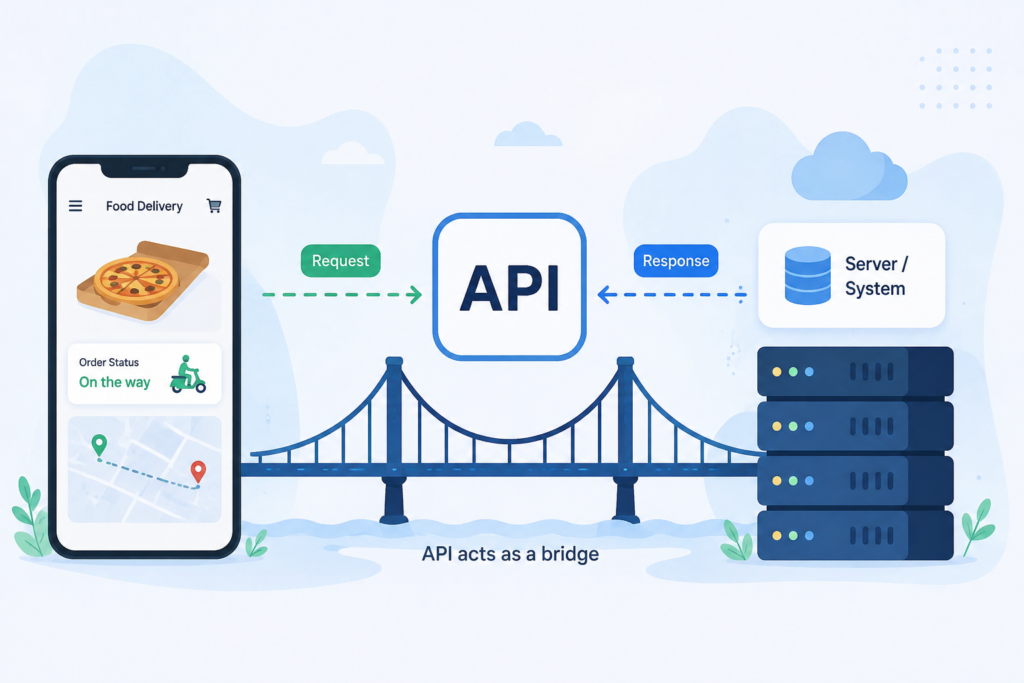
For example, when you open a food delivery app and check the status of your order, the mobile app needs data from the company’s server. An API helps send the request and return the required information to the app.
In simple words, an API works like a bridge between a mobile application and another one system.
How Do APIs Work in Mobile Apps?
APIs usually work through requests and fully responses. When a user performs an action in an application, the application sends a request to the server through an API. The server processes the request and sends the required information back.
For example:
- A user opens a shopping application.
- The app requests product information through an API way.
- The server processes the request.
- The API sends the product details back.
- The app displays the information to the user.
This process usually happens within seconds, giving users a smooth app experience.
How APIs Improve Modern Mobile App Development
1. Faster App Development
APIs help developers save time because they do not need to create every feature from the begin. Developers can connect the app with existing service through APIs.
For example, instead of create a complete payment software, developers can integrate a payment API into the application. This allows the team to focus more on the app main features and good user experience.
2. Easy Integration With Third-Party Services
Modern mobile apps often depend on several external services. APIs make it easy to connect these services with an application.
Developers can use APIs for:
- Payment gateways
- Google Maps and location services
- Social media login
- Email and SMS services
- Cloud storage
- Weather information
- Online booking systems
- Analytics tools
This makes it possible to add useful features without developing everything internally.
3. Better User Experience
Users expect mobile apps to work quickly and without unnecessary steps. APIs help apps receive and send data efficiently, which can improve the overall user good experience.
For example, a travel app can use APIs to show live flight info, while a food delivery application can use location APIs to display delivery all activity track.
When details is available at the right time, users can interact with the app more easy.
4. Secure Data Communication
Security is an important part of mobile app developing. APIs can be desig with authentication and authorization way to control who can access specific all details.
Developers can use process such as API keys, tokens and secure connections to protect communication between the app and server.
Proper API security can help protect sensitive details such as customer details, account and transaction data.
5. Easy Access to Real-Time Information
Many mobile applications need updated information. APIs allow apps to request the latest data from servers whenever required.
For example, APIs can help a mobile app display:
- Live order status
- Current product availability
- Updated prices
- Account balances
- Location information
- New notifications
- Booking availability
This helps businesses provide users with more accurate and useful information.
6. Supports App Scalability
As a business grows, its mobile application may need new features and integrations. A well-designed API structure can make these changes easier.
Developers can add new services without changing the complete application. This makes APIs useful for businesses that plan to expand their apps over time.
7. Helps Connect Mobile Apps With Backend Systems
A mobile app normally needs a backend to store and manage information. APIs help the mobile application communicate with the backend system.
For example, an e-commerce app can use APIs to connect the mobile interface with:
- Customer accounts
- Product databases
- Shopping carts
- Orders
- Payments
- Delivery information
This creates a connection between what users see in the app and the data managed by the business.
8. Makes Cross-Platform Development Easier
Businesses may want their online apps to work on both Android and iOS way. APIs can help different mobile applications communicate with the same backend software.
For example, an Android app and an iOS app can use the same APIs to access customer account, product data or order details.
This can less duplicated backend work and make application management easy.
Benefits of Using APIs for Businesses
Using APIs in mobile app development can provide several benefits for businesses:
- Faster development and integration
- Lower development effort
- Better application flexibility
- Easier connection with third-party services
- Improved user experience
- Access to real-time information
- Easier maintenance and updates
- Better support for future growth
APIs are especially useful when a business wants to create a mobile application that needs to connect with so many multiple software.
Tips for Using APIs in Mobile App Development
To get better results from APIs, development teams should follow some basic practices:
Choose reliable APIs: Use APIs that are all stable, well documented and daily maintained.
Focus on security: Protect API access and sensitive user data with suitable authentication and security methods.
Handle errors properly: Make sure the app can respond good when an API is unavailable or returns an problem.
Test APIs regularly: Test API performance, security and compatibility before and after app updates.
Keep APIs well documented: Clear documentation helps developers understand how to use and maintain APIs.
Monitor performance: Track API response time and errors to identify problems more early.
Conclusion
APIs have become an most important part of modern mobile application. They help mobile applications communicate with servers, databases, payment systems, maps and many other all services.
By using APIs complate, businesses can develop apps faster, add useful features, improve user experience and make their applications easly to maintain. APIs also provide the very flexibility needed to support future updates and business grow.
If you are planning to create a mobile application for your business, Scrupulous Technology can help you create a reliable and user-friendly mobile solution based on your business needs.