Mobile apps have become a part of our day life. Whether you’re ordering food, booking a shopping online, or chatting with friends, mobile apps help make daily working life. But have you ever wondered how these apps connect with pay process gateways, maps, social media or live database?
The answer is APIs.
APIs work quietly in the background, allowing different applications to communicate with all. They make smarter software, faster and more useful without developers having to build every feature from planing.
In this blog, we’ll explain what APIs are, how they work process, and why they are so important for new technology mobile app development.
What is an API?
API stands for Application Programming Interface.
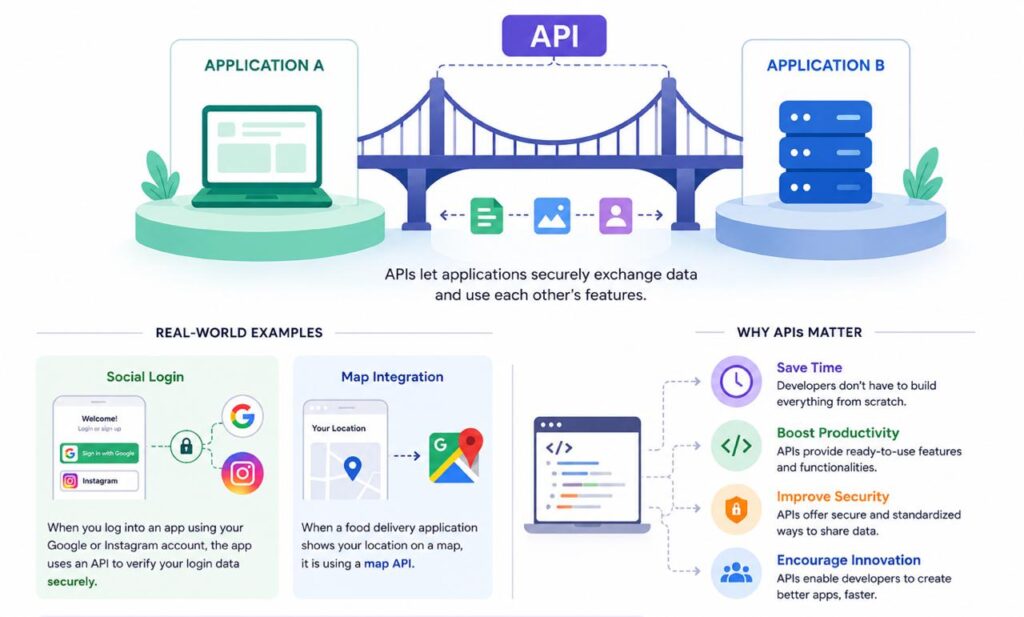
An API is a bridge that allows two different software to share info and work together.
For example, when you log into an app using your Google or instagram account, the app uses an API to verify your login data securely. Similarly, when a food delivery application shows your location on a map, it is using a map API.
Without APIs, developers would have to create every feature themselves, making app development much more difficult and time-consuming.
How Do APIs Work?
APIs allow one application to send a request to other app or server. The server processes the request and sends answer the required details.
For example:
- A weather app requests today’s weather all data.
- The weather work service sends the latest weather info.
- The app displays the output on your screen.
This entire process takes only a some second, giving users real-time information without any delay time.
Why Are APIs Important for Mobile Apps?
APIs help developers add powerful features without building everything from the start process. They also add app performance and user experience.
Instead of creating payment steps, maps, messaging services, or login systems from scratch, developers can integrate trusted APIs that already provide all services.
This saves both time and development costs.
Benefits of APIs in Mobile App Development
Faster App Development
APIs provide ready-made answer for common features like payments, notifications, authentication, and maps. Developers can focus on creating unique new features instead of rebuilding existing ones, less development time.
Better User Experience
Users expect mobile apps to be fast and convenient. APIs make this possible by offering part such as: One-tap social login, Real-time location tracking, Instant notifications, Secure online payments, Live chat support. These features make the app more enjoyable and easier to use.
Real-Time Information
Many apps need live data. For example: Stock market apps display live prices, Weather apps show current forecasts, Sports apps update live scores, Delivery apps provide real-time order tracking. APIs fetch this information instantly, keeping users updated.
Secure Data Sharing
Security is one of the big concerns for any mobile application. Trusted APIs use secure authentication methods and encrypted connections to protect sensitive user database. This helps businesses keep user info safe while maintaining user trust.
Easy Integration with Third-Party Services
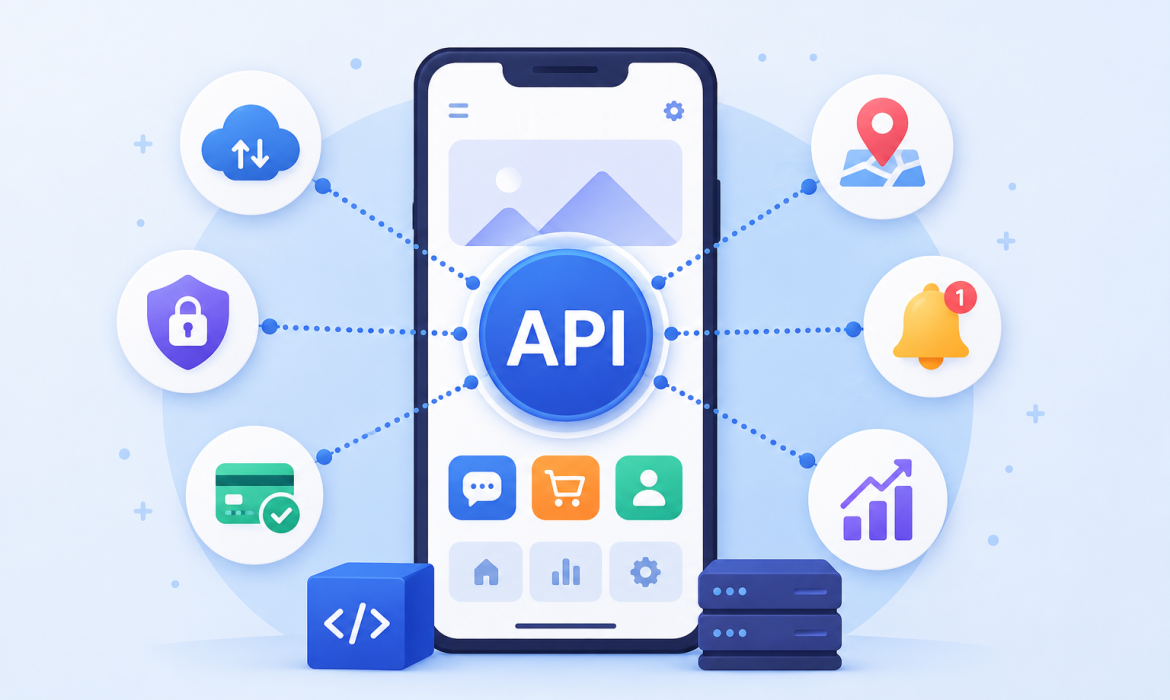
Modern apps often rely on several more services. Popular API integrations include: Payment gateways, Google Maps, Social media login, SMS verification, Email services, Video calling, Cloud storage. These integrations make mobile apps more powerful without increasing development complexity.
Easy to Scale
As your business grow, your mobile app also needs new function. APIs make it easy to add new services without rebuilding the entire software. This flexibility allows businesses to expand their apps as customer needs change.
Common Types of APIs Used in Mobile Apps
Here are some APIs commonly used in mobile app development:
- Authentication APIs for secure user login
- Payment APIs for online transactions
- Map APIs for location services
- SMS and OTP APIs for user verification
- Push Notification APIs for instant alerts
- Social Media APIs for sharing and login
- Cloud Storage APIs for saving files
- Weather APIs for live weather updates
Each API adds useful functionality while improving the overall user experience.
Industries That Benefit from APIs
Almost every industry uses APIs to improve its mobile applications.
Some common examples include:
- E-commerce apps
- Healthcare applications
- Banking and finance apps
- Food delivery platforms
- Taxi booking services
- Education apps
- Travel booking apps
- Fitness and wellness applications
No matter the industry, APIs help businesses deliver very faster and smarter online work experiences.
Tips for Using APIs Successfully
To get the best results from APIs, follow these best practices:
- Choose trusted and secure API providers.
- Keep APIs updated with the latest versions.
- Protect API keys and access credentials.
- Monitor API performance regularly.
- Test integrations before launching your app.
- Use only the APIs your application actually needs.
Following these practices helps improve app reliability and security.
Conclusion
APIs are one’s most important building blocks of new mobile software. They help apps connect with strong services, deliver real-time details, improve security and create a best experience for users.
Whether you’re developing an eCommerce app or business application, APIs make development faster and more efficient.
At Scrupulous Technology, we build secure and feature-rich mobile applications using the latest API integrations and modern technologies. If you’re planning to develop a custom mobile app for your business, our work experienced employess is here to help you turn your idea into a successful digital solution.