In today’s fast-changing business world, customer info work a very important role in business growth. Every business collects information like past customer names, contact details, purchase history, support requests, and payment records. Manag all this info manually work can become very difficult and time-consuming.
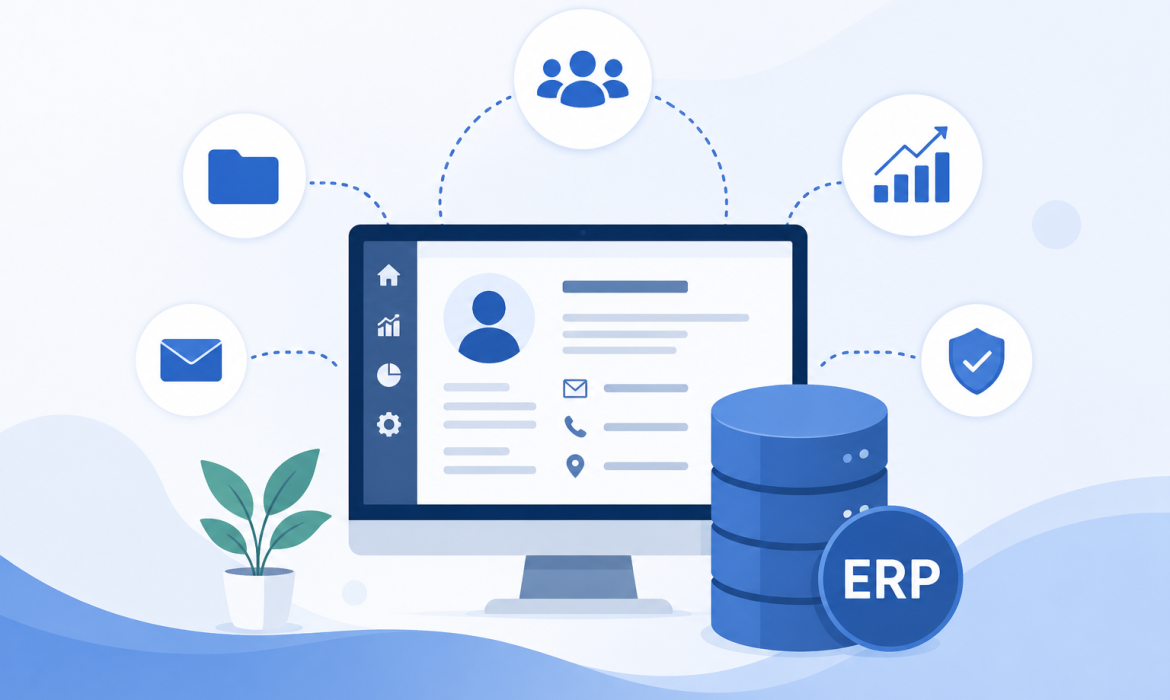
This is where ERP software becomes helpful. ERP systems help businesses organize, manage and secure customer information in one place. It improves communication, saves time and helps companies provide best customer service.
For businesses looking to improve customer management and business operations, ERP solutions from Scrupulous Technology
can make daily work easier and more efficient.
What is ERP?
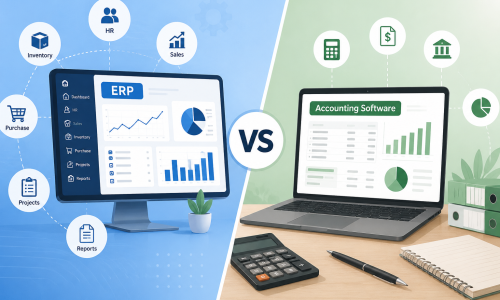
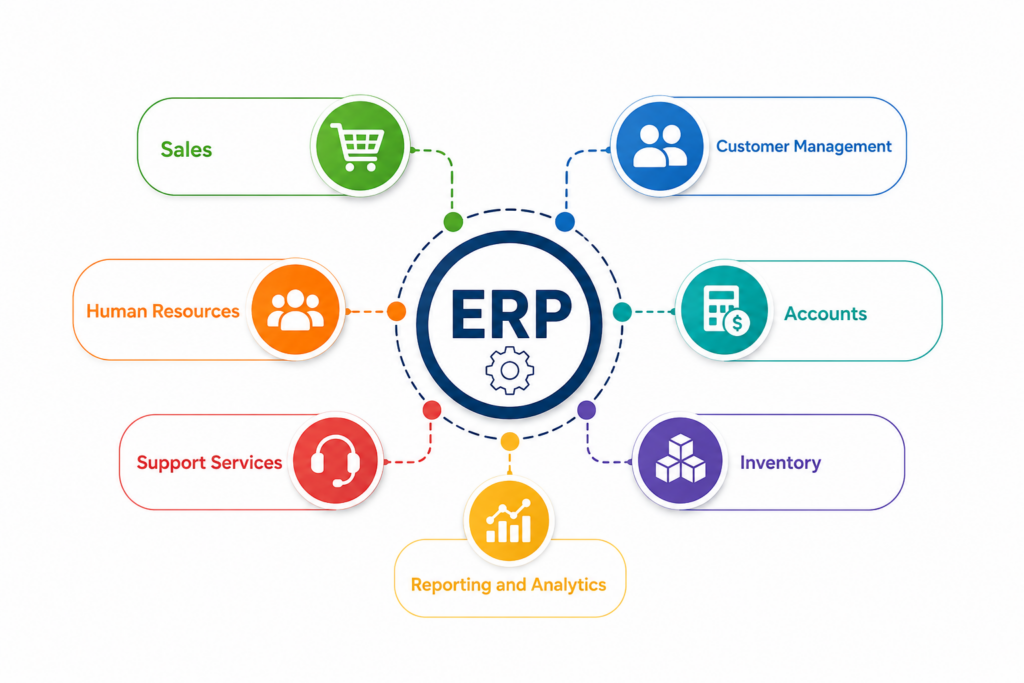
ERP stands for Enterprise Resource Planning. It is software that helps businesses manage different departments and business activities from a single online platform.
Instead of using different software for every department, ERP brings everything together into one system.
Why Customer Data Management is Important
Customer data helps businesses understand their customers better way.
When database is properly managed, companies can:
- Improve customer relationships
- Provide faster support
- Increase sales opportunities
- Track customer history
- Create personalized services
- Build long-term trust
Without a proper system, businesses may face:
- Duplicate records
- Lost customer information
- Delayed responses
- Data confusion between teams
- Security risks
ERP software helps solve these problems by storing all customer information in a centralized system.
How ERP Helps Businesses Manage Customer Data
1. Centralized Customer Information
ERP stores all customer details in one secure location. Employees from different departments can access updated information whenever needed.
This may include:
- Customer names and contact details
- Purchase history
- Payment records
- Orders and invoices
- Customer support conversations
Having all information in one place less confusion and improves teamwork.
2. Better Customer Service
When customer data is easily available, support teams can respond quickly to customer questions and problems.
For example:
- Support staff can check previous orders instantly
- Sales teams can understand customer preferences
- Accounts teams can verify payment details quickly
This creates a smoother customer experience and increases customer satisfaction.
3. Faster Access to Customer History
ERP systems keep complete records of customer interactions.
Businesses can easily track:
- Past purchases
- Service requests
- Complaint history
- Communication records
This helps employees understand customer needs without asking the same questions repeatedly.
4. Improved Data Accuracy
Manual data entry often creates mistakes like duplicate records or missing information. ERP systems reduce these errors by automating many processes.
Benefits include:
- Accurate customer records
- Reduced paperwork
- Better reporting
- Improved decision-making
Clean and organized data helps businesses work more efficiently.
5. Enhanced Data Security
Customer information is sensitive and should be protected carefully.
ERP software provides strong security features such as:
- User access control
- Password protection
- Data backup
- Secure cloud storage
Only authorized employees can access important customer information, helping businesses maintain privacy and trust.
6. Better Communication Between Departments
Different departments often need the same customer information. ERP systems allow teams to work together using shared data.
For example:
- Sales teams can update customer orders
- Accounts teams can view billing information
- Support teams can check service history
This improves coordination and avoids communication gaps.
7. Personalized Customer Experience
ERP software helps businesses understand customer need and preferences. Companies can use this details to provide personalized services.
Examples include:
- Sending customized offers
- Recommending selected products
- Offering very special discounts
- Providing faster support
Customers appreciate businesses that understand their needs.
8. Real-Time Reporting and Insights
ERP systems provide reports and analytics based on customer data.
Businesses can track:
- Customer buying patterns
- Sales performance
- Customer satisfaction
- Revenue growth
These insights help companies make smart business decisions and add future strategies.
Industries That Benefit from ERP Customer Data Management
All industries use ERP systems to manage customer database effectively, including:
- Retail Businesses
- Healthcare Companies
- Manufacturing Industries
- Educational Institutions
- E-commerce Businesses
- Service Providers
- Logistics Companies
No matter the business size, ERP software helps improve customer management and operational efficiency.
Tips for Choosing the Right ERP System
1. Understand Your Business Needs
Choose ERP software based on your company size, industry, and daily operations.
2. Look for Easy-to-Use Features
A user-friendly ERP system helps employees learn and use the software quickly.
3. Check Security Features
Make sure the ERP system offers proper data protection and backup options.
4. Choose Scalable Software
Your ERP system should grow with your business needs in the future.
5. Get Expert Support
Working with experienced ERP service providers ensures smooth implementation and support.
Conclusion
Managing customer database properly is very important for business grow. ERP software helps businesses organize all users details, improve communication, add on security, and provide good customer experiences.
By using ERP solutions, companies can save time, less errors and make smart business decisions. Whether you run a small business or a big organization, ERP systems can work improve overall efficiency and users satisfaction.
If you are looking for ERP solutions for your business, Scrupulous Technology
provides smart and user-friendly ERP services designed to support business growth and simplify customer database management.