In today’s competitive business environment, managing customer relationships properly is one of the big keys to adding sales. A Customer Relationship Management system work businesses organize customer details, and build long-time relationships with clients.
Many businesses invest in CRM software, but simple installing a CRM is not enough. To get results, companies need the right CRM strategies that can improve employee productivity, customer satisfaction and overall product sales.
In this blog, we will discuss the one of the best CRM strategies that can help businesses sales and add on customer relationships effectively.
What is CRM?
CRM stands for Customer Relationship Management. It is a software system that helps businesses manage interactions with potential customers.
A CRM system stores important customer information such as:
- Customer contact details
- Purchase history
- Sales activities
- Customer inquiries
- Follow-ups and communication records
- Lead management details
CRM helps sales employee stay organized and provides best customer service by keeping all customer details in one software.
Why CRM is Important for Sales Performance?
Sales success on customer communication and relationship management. Without proper tracking, businesses may loss leads, miss follow-ups or fail to understand cusers needs.
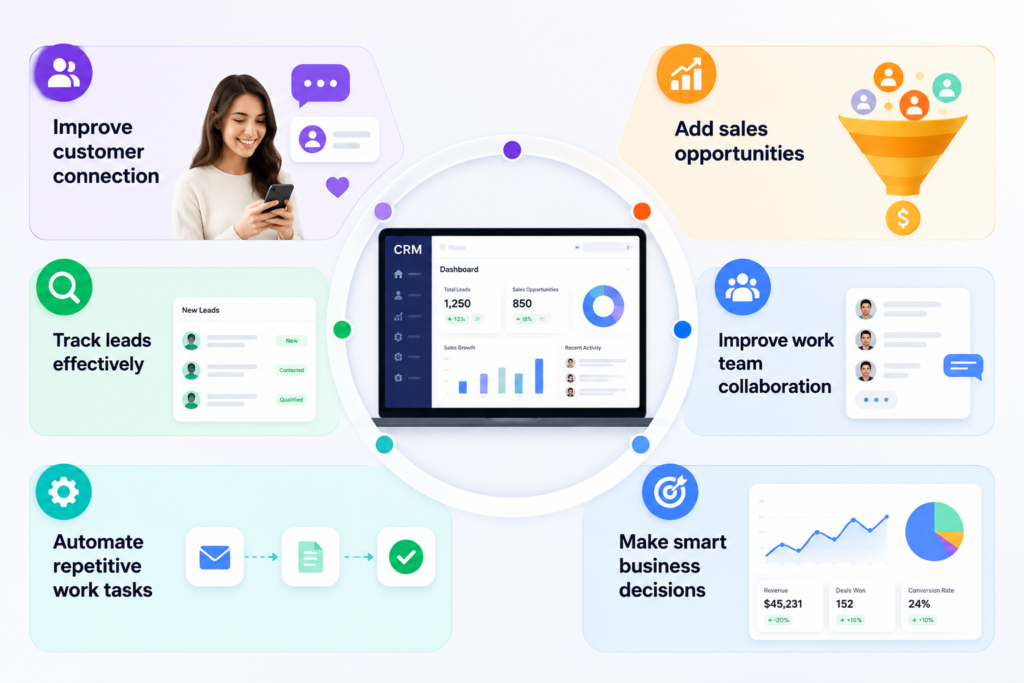
CRM systems help businesses:
When used step by step, CRM can significantly add conversion rates and customer retention.
Best CRM Strategies to Improve Sales Performance
1. Centralize Customer Information
One of the big advantages of CRM is storing all customer details in a single system. Sales teams can fast access customer past, previous conversations and buying need.
This helps businesses:
- Understand customer needs better
- Provide personalized communication
- Improve response times
- Reduce confusion among teams
When customer idetails is organized, sales working teams can focus more on closing deals instead of searching for database.
2. Automate Sales Processes
Manual tasks consume a lot of time for sales employee. CRM automation can simple many daily activities such as:
- Sending follow-up emails
- Lead assignment
- Appointment reminders
- Sales notifications
- Customer status updates
Automation allows sales teams to spend more time interacting with customers and less time handling repetitive tasks.
3. Track and Manage Leads Properly
Lead management is one of the most important CRM steps of all strategies. Businesses should track every lead from the first interaction last conversion.
A CRM system helps businesses:
- Identify quality leads
- Monitor lead status
- Prioritize potential customers
- Improve follow-up processes
- Reduce missed opportunities
Proper lead management add the chances of converting prospects into paying customers.
4. Personalize Customer Communication
Customers prefer businesses that understand their all needs. CRM systems help companies create personalized communicat based on customer useing.
Businesses can personalize:
- Email campaigns
- Product recommendations
- Follow-up messages
- Promotional offers
- Customer support interactions
Personalized communication improves customer trust and increases engagement.
5. Use CRM Analytics and Reports
CRM software provides valuable insights through reporting and analytics. Businesses can analyze:
- Sales performance
- Customer behavior
- Team productivity
- Conversion rates
- Revenue trends
These insights help companies make better decisions and improve their sales strategies over time.
6. Improve Team Collaboration
Sales, marketing and customer support teams often work same place. CRM systems allow departments to share customer details very easily.
Better collaboration helps businesses:
- Provide faster support
- Avoid communication gaps
- Improve customer experience
- Increase efficiency
When all teams work with the same customer info, business operations become more productive.
7. Focus on Customer Retention
Many businesses focus only on getting new users, but retaining existing old customers is very important. CRM systems help businesses maintain long-time relationships through:
- Regular follow-ups
- Loyalty programs
- Customer feedback tracking
- Personalized offers
- Better support services
Happy customers are more likely to make repeat purchases and recommend your business to others.
8. Integrate CRM with Other Business Tools
A CRM system becomes more powerful when integrated with other business software such as:
- Email marketing tools
- ERP systems
- Customer support software
- Social media platforms
- Accounting software
Integration improves workflow and allows businesses to manage operations more and more efficiently.
9. Train Your Sales Team Properly
Even the best CRM system cannot deliver results if employees do not know how to use it proper system. Businesses should provide CRM training to their sales teams daily.
Training helps employees:
- Understand CRM features
- Improve productivity
- Use automation effectively
- Manage leads correctly
- Generate better sales reports
A well-trained team can maximize the benefits of CRM software.
10. Monitor CRM Performance Regularly
Businesses should daily evaluate their CRM system and sales performance.
Monitoring helps identify:
- Areas for improvement
- Customer service issues
- Sales bottlenecks
- Team performance gaps
Continuous improvement ensures that CRM strategies remain effective and aligned with business targets.
Common CRM Mistakes Businesses Should Avoid
Ignoring Customer Data Updates
Outdated customer info can create communication problems and less sales opportunities.
Not Following Up with Leads
Delayed responses can result in losing potential customers to competitors.
Using CRM Only for Data Storage
CRM should be used actively for sales planning, communication, automation, and analytics.
Lack of Employee Training
Without proper training, teams may not use CRM efficiently.
Overcomplicating the CRM System
Simple and user-friendly CRM processes often work better than not to simple systems.
Tips for Successful CRM Implementation
- Select a CRM system that matches your business needs
- Keep customer data updated regularly
- Automate repetitive sales tasks
- Train employees consistently
- Monitor customer interactions carefully
- Analyze CRM reports frequently
- Focus on long-time customer relationships
- Improve communication between all departments
Conclusion
CRM plays a largest role in improving sales performance and building very strong customer relationships. By implementing the best CRM strategies, businesses can increase productivity, improve customer satisfaction, and generate big amount revenue.
From lead management and automation to personalized communication and analytics, CRM systems work businesses streamline their entire sales all process.
If you are looking to implement smart CRM solutions for your business, Scrupulous Technology provides professional CRM development and business automation services to help companies improve efficiency and drive long-time growth.