Manufacturing businesses have many things to manage all day, from raw materials and production to work team, sales and customer orders. When all these activities are handled using different tools or google sheets, it can become difficult to keep everything well organized.
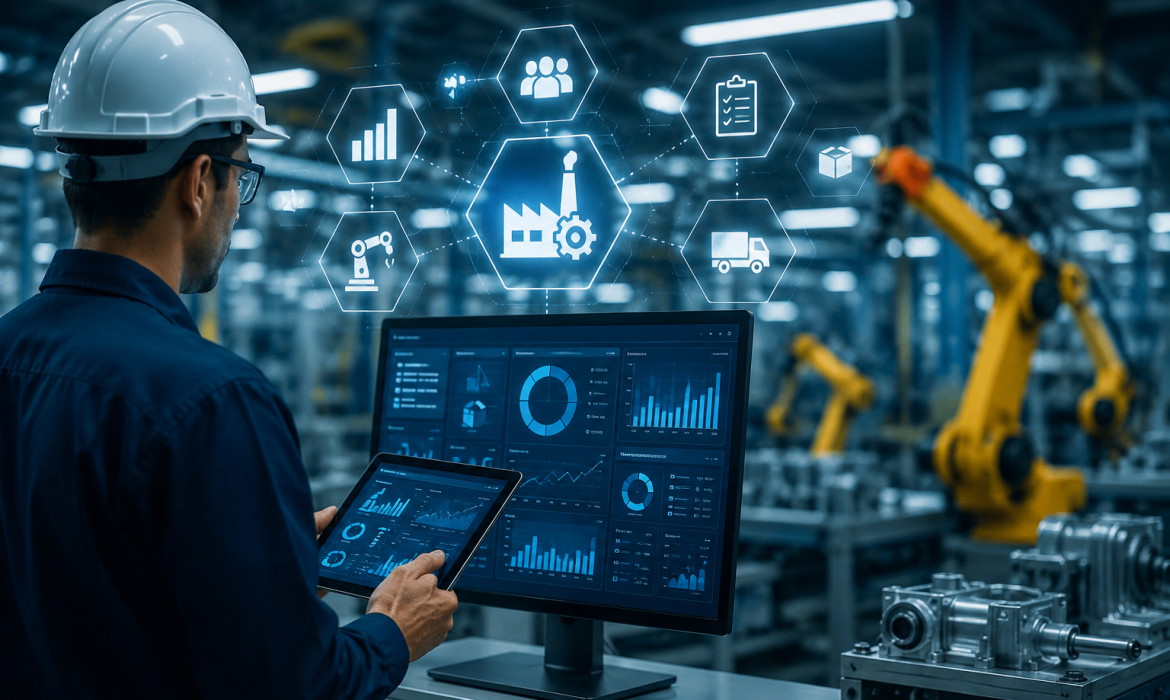
ERP software can make this work much easy. An ERP system brings important business activities together in one system, helping manufacturers manage their daily operations more efficiently.
For manufacturing companies, ERP software can improve production planning, inventory management, accounting, sales, purchasing, and reporting. It also gives managers a very clearer view of what is happening across the business.
What is ERP Software for Manufacturing Companies?
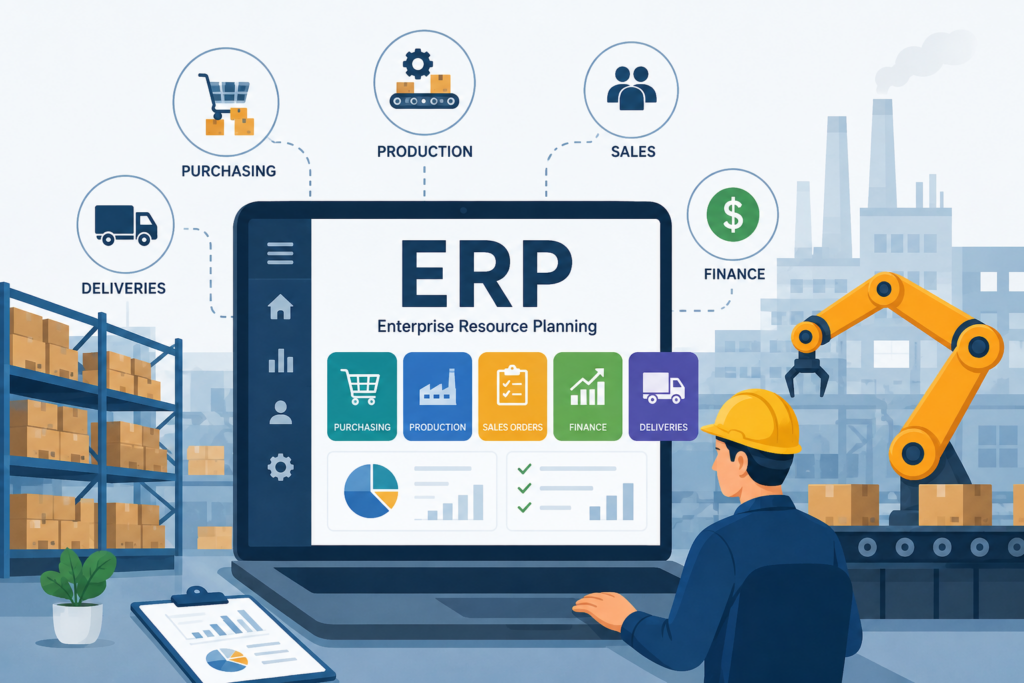
ERP stands for Enterprise Resource Plan. ERP software is a business management system that connects different departments and processes through one software platform.
For a manufacturing company, an ERP system can manage activities such as purchasing raw materials, planning production, managing sales orders, handling finances and monitoring deliveries.
Instead of keeping information in separate systems, employees can work with shared. This helps reduce confusion and makes everyday business operations easy.
How Does ERP Software Work in Manufacturing?
ERP software connects different manufacturing processes and allows info to move between departments. For example, when a new customer order is receive, the system can help the team check stock availability, plan production, manage needed materials and track the order.
Some important areas managed by manufacturing ERP software include:
Production Management: Helps planner, full plan schedule and monitor manufacturing all activities.
Inventory Management: Tracks raw database, work-in-progress product and finished work.
Purchase Management: Helps manage supplier, purchase orders and material needs.
Sales Management: Keeps track of customer full orders details, invoices and all day sales.
Finance and Accounting: Helps manage full payments and financial records.
Employee Management: Stores employee details and supports workforce-related activities.
Reports and Analytics: Provides useful reports to help managers understand business work.
Key Features of ERP Software for Manufacturing Companies
1. Production Planning
Production planning is one of the most important parts of manufacturing. ERP software helps businesses plan production based on customer orders, available data and production capacity.
It can help teams well organize production schedules and low unnecessary delays.
2. Inventory Management
Keeping the right amount of stock is important for every manufacturing company. Too much inventory can adding storage costs, while too little stock can stop production.
ERP software helps businesses monitor inventory levels and track raw material, finished products and other items in real time.
3. Purchase Management
Manufacturers regularly purchase raw materials, equipment, and other supplies. ERP software can help manage suppliers, purchase requests, purchase orders, and purchasing records from one place.
This makes it easier for businesses to keep track of what they need and when they need it.
4. Sales and Order Management
ERP software helps companies manage customer orders from the begine to the final delivery. Teams can track, sales orders, invoices and order status without checking multiple software.
This can make order processing faster and less the chances of missing important information.
5. Financial Management
Managing business finances manually can take a lot of time. ERP software can bring financial information into one system and help businesses manage invoices, expenses, payments, and other financial activities.
Having organized financial information also makes it easier for managers to understand the company’s financial position.
6. Employee and Workforce Management
Manufacturing companies often have big teams working across different departments. ERP software can help maintain employee info, manage departments and support workforce plan.
This can make employee-related processes more organized.
7. Real-Time Reports
Good business decisions depend on accurate details. ERP software provides reports related, inventory, sales and finances.
Managers can use these reports to understand current work performance and identify areas that need improvement.
8. Quality Management
Product quality is more important for create customer trust. Manufacturing ERP systems can help businesses record checks, track production problem, and maintain quality-related details.
This makes it easy to identify problems and improve production processes.
Benefits of ERP Software for Manufacturing Companies
Improves Business Efficiency
ERP software brings different business processes plan into one system. Employees can spend less time searching for details and more time focusing on important tasks.
Reduces Manual Work
Many repetitive daily activities can be managed through an ERP software. This less the need for manual all data entry and helps minimize common human errors.
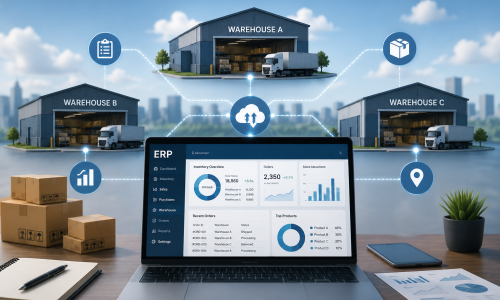
Better Inventory Control
With updated inventory information, businesses can understand what materials and products are available. This helps reduce overstocking and stock shortages.
Improves Production Planning
ERP software helps manufacturing teams plan production based on orders, materials, and available resources. Better planning can help reduce production delays.
Easy Access to Business Information
Instead of collecting information from different departments, managers can access important business database from one system. This gives them a best understanding of overall business working performance.
Better Decision-Making
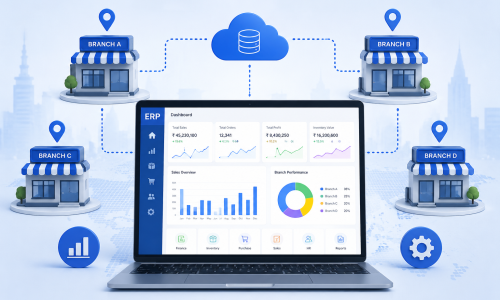
ERP reports and dashboard can provide useful details about sales, production and expenses. Managers can use this information to make more informed business decisions.
Better Customer Service
When order, inventory and delivery info is properly organize, employees can respond to customer questions more fast. This can added the overall customer experience.
Supports Business Growth
As a manufacturing company, managing more orders, employees and products can become very difficult. A scalable ERP system can help businesses handle increasing operations without depending on multiple all disconnected tools.
How to Choose the Right ERP Software for Manufacturing
Every manufacturing business has different needs, so selecting an ERP software should be based on actual business needs.
Before selecting an ERP solution, consider:
Business Requirements: Identify which processes you want to manage through the ERP system.
Industry Features: Make sure the software supports manufacturing-related such as production plan and inventory tracking.
Ease of Use: Select software that employees can understand and use without full of unnecessary complexity.
Scalability: The ERP should be support your business as it grow.
Integration: Check system can work with other tools and software used by your business.
Security: Business and customer details should be protected with proper security features.
Support and Maintenance: Reliable technical support can be important when your business depends on the ERP system every day.
Conclusion
ERP software can help manufacturing all companies manage production, inventory, purchasing, sales, employees and other business activities from one connected system. It can less manual work, improve data accuracy, support better planning and give managers a clear view of business operations.
The best ERP solution can also help a manufacturing company save time, improve efficiency, provide better customer service, and prepare for future grow.
If your manufacturing business is looking for a customized ERP solution, Scrupulous Technology can help you build software based on your business processes and requirements. A well-planned ERP system can make everyday operations more organized and help your business work more efficiently.