As businesses grow, managing day by day operations and customer relationships becomes big challeng. Many business owners hear about ERP and CRM software but are often unsure which one they good for business.
Both ERP and CRM systems work improve business efficiency, but they serve different way. Selecting the best software can help your business save time, increase product, improve customer satisfaction and support long-time growth.
In this blog, we will explain ERP and CRM software in simple time, compare their all features and help you decide which solution is good for your business.
What is ERP Software?
ERP software is designed to manage and automate core business operations from a single platform.
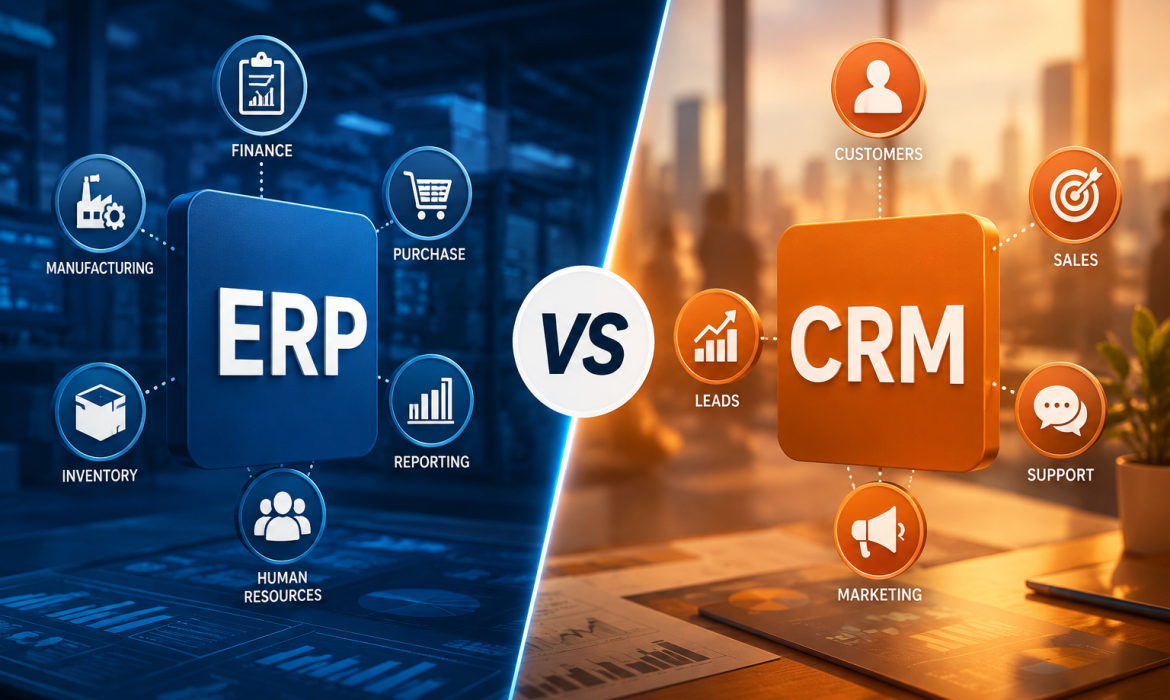
An ERP system helps businesses handle various departments such as:
- Finance and Accounting
- Inventory Management
- Human Resources
- Procurement team and Purchasing
- Manufacturing and Production
- Sales and Reporting
Instead of using so many software applications, ERP brings everything together in one centrl system.
What is CRM Software?
CRM software focuses on managing customer interactions and improving users relationships with potential and existing customers.
A CRM system helps businesses:
- Store customer information
- Track leads and enquiries
- Manage sales pipelines
- Monitor customer communication
- Schedule all follow-ups
- Improve customer need and service
CRM software is mainly used by product sales, marketing and customer support teams.
How Does ERP Work?
ERP software connects different departments within a business and allows data to flow between them in real time.
For example:
- When a sale is made, inventory is automatically updated.
- Accounting records are updated instantly.
- Purchase orders can be generated automatically when stock levels are low.
- Management can view reports from all departments in one dashboard.
This reduces manual work and improves overall efficiency.
How Does CRM Work?
CRM software collects and organizes customer information in one place.
For example:
- A lead submits an enquiry through your website.
- The CRM stores the lead details automatically.
- Sales representatives can track communication history.
- Follow-up reminders are generated.
- Managers can monitor sales performance and conversion rates.
This helps businesses build stronger customer relationships and close more sales.
Major Differences Between ERP and CRM
1. Primary Focus
ERP Software
ERP focuses on managing internal business processes and operations.
CRM Software
CRM focuses on managing customers, new leads and sales activities.
2. Users
ERP Software
Used by finance work teams, HR departments, inventory managers and operations employess.
CRM Software
Used by sales team, marketing professionals and customer support representatives.
3. Business Goal
ERP Software
Improves operational efficiency and resource all management.
CRM Software
Improves user relationships and add on sales opportunities.
4. Data Management
ERP Software
Stores business-related details such as inventory, accounts, payroll, and production data.
CRM Software
Stores customer information, communication records, leads, and sales activities.
5. Reporting
ERP Software
Provides reports related to business work performance, inventory, finances and operations.
CRM Software
Provides reports related to leads, sales performance, customer engagement, and conversions.
Benefits of ERP Software
1. Improved Business Efficiency
ERP automates repetitive tasks and less manual work.
2. Better Data Accuracy
All departments work from the same database source, low errors and duplication.
3. Centralized Information
Business information is available in one system, making management easier.
4. Faster Decision Making
Real-time reports help business owners make inform best decisions.
5. Increased Productivity
Employees spend less time managing google sheets and more time focusing on important works.
Benefits of CRM Software
1. Better Customer Relationships
CRM real process businesses understand customer needs and better service.
2. Improved Lead Management
Sales work team can track and nurture leads more effectively.
3. Higher Sales Conversion Rates
Organized customer data helps businesses close deals faster.
4. Enhanced Customer Retention
Daily follow-ups add more customer satisfaction and loyalty.
5. Better Team Collaboration
Sales and support teams can access the same customer information.
Which Businesses Need ERP Software?
ERP software is ideal for businesses that:
- Manage inventory and stock
- Have multiple departments
- Handle manufacturing processes
- Need financial management tools
- Want to automate operational workflows
Examples include manufacturing companies, wholesalers, distributors, and large enterprises.
Which Businesses Need CRM Software?
CRM software is ideal for businesses that:
- Generate leads regularly
- Have dedicated sales teams
- Provide customer support services
- Focus on customer retention
- Want to improve sales process
Examples include all IT companies, digital marketing, consultants, real estate firms and service providers.
Can a Business Use Both ERP and CRM?
Yes.
Many growing process businesses use both ERP and CRM software together.
While CRM helps attract and manage users, ERP helps manage internal operations after a sale is completed.
When integrated, both software provide a full view of your business and customers, working efficiency and profitability.
Tips for Choosing the Right Software
- Identify your large business challenges.
- Understand your customer management needs.
- Consider future business growth.
- Choose software that can be customized.
- Look for integration capabilities.
- Selecting a trusted software development partner.
- Request a demo before making a very strong decision.
Conclusion
ERP and CRM software are both very strong business tools, but they solve different problems. ERP helps manage internal operations, while CRM helps manage customer relationships and sales.
If your goal is to improve business processes, inventory management, accounting and operations, ERP may be the right choice. If you want to adding sales, manage all leads and improve customer engagement, CRM is likely the good option.
For so many growing businesses, combining both ERP and CRM systems delivers the more best results.
At Scrupulous Technology, we work businesses implement customized ERP and CRM solutions that improve efficiency, streamline operations and support long-time grow. Contact our team today to find the best software solution for your business.