In digital world, having a mobile app is no longer optional—it’s a smartest way to grow your business. Whether you run a small business or a large company, a mobile app helps you stay connected with your users and viewers.
But when you plan to create an app, one common question comes up:
Should you go for a native app or a hybrid app?
At Scrupulous Technology, we help businesses select the best option based on their cost and business targets. In this blog, we’ll explain both in a very easy way so you can easily decide.
What is a Native App?
A native app is create for one selected system, like Android or iOS.
This means:
- Android apps are made using Java or Kotlin
- iOS apps are made using Swift or Objective-C
These all apps are downloaded from app stores and are known for their fast working and easy working experience.
👉 In simple words, native apps are made specially for one device, so they work with top performance.
What is a Hybrid App?
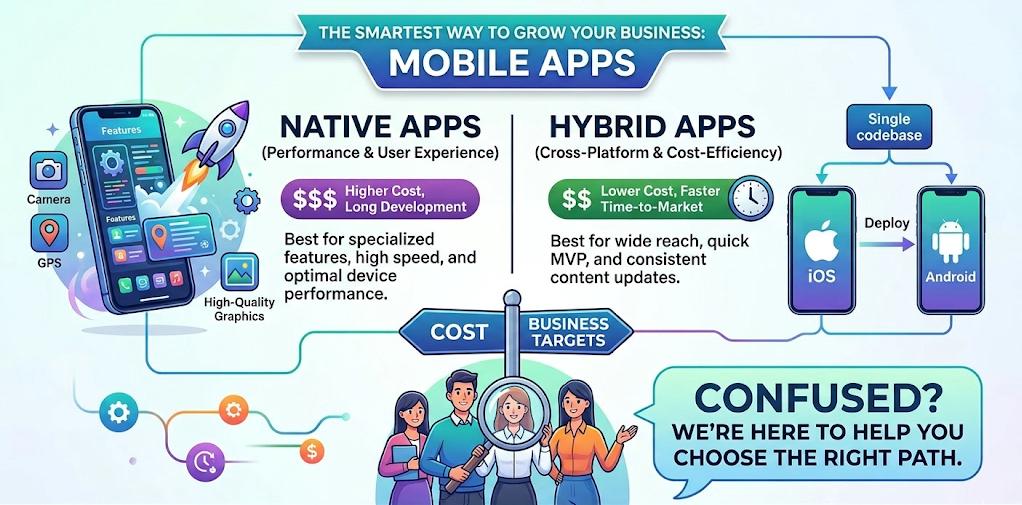
A hybrid app is one app that works on so many platforms like Android and iOS.
It is created using:
- HTML
- CSS
- JavaScript
Then it is wrapped inside a native app.
👉 In simple words, you create one time and use it everywhere, which saves time and money also.
How Do They Work?
Native Apps
- Built once for all platforms
- Use a single codebase
- Access phone features through plugins
Hybrid Apps
- Built separately for Android and iOS
- Directly use phone features like camera, GPS, notifications
- Very fast and responsive
Key Differences
- Performance: Native apps are faster; hybrid apps are little slow
- Cost: Native apps are costly; hybrid apps are low budget cost
- Development Time: Native takes longer time; hybrid is quicker
- User Experience: Native feels smoother and more easy
- Maintenance: Hybrid is easier because there’s only one design and code
Benefits of Native Apps
Fast Performance
Native apps work smoothly because they are built for one platform.
Better User Experience
They offer clean design, smooth navigation, and quick response.
Full Access to Features
They can easily use mobile features like camera, GPS, and microphone.
Strong Security
They follow platform rules, making them more secure side.
Benefits of Hybrid Apps
Cost-Effective
One app works on many platforms, so you save money.
Faster Development
You can launch your app much quicker.
Easy to Maintain
Updates are simple because there is only one codebase.
Reach More Users
You can plan both Android and iOS users at the same time.
Which One Should You Choose?
It depends on what your business needs:
- Go for native apps if you want top performance and a premium feel
- Choose hybrid apps if you have a limited budget and want to launch fast
- If your app is complex (like gaming or heavy features), native is better
- If your app is simple (like business or content apps), hybrid works well
Tips to Make the Right Decision
- Be clear about your business targets
- Decide your budget in advance
- Understand your target users
- Focus on user experience
- Take advice from specialists
Conclusion
Both native and hybrid apps are good—it just depends on what you require. There is no correct option for everyone.
At Scrupulous Technology, we help you choose the best option and build apps that actually give best results. Whether you need a native or hybrid mobile app, our team will guide you each steps.
Planning to build a mobile app?
Contact Scrupulous Technology today and turn your idea into a powerful app!