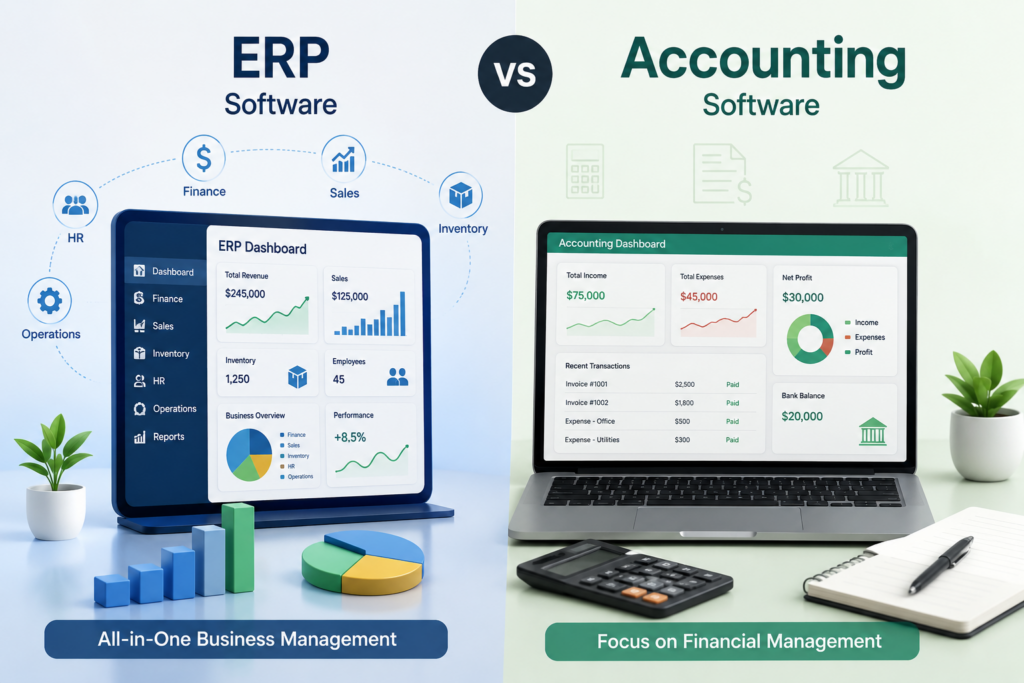
Managing business finances is an important part of running any company. Many businesses use accounting software to record income, expenses and other financial transactions. However, as a business grows, it may need to manage much more than just its accounts.
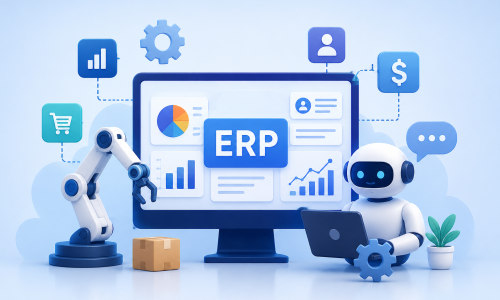
This is where ERP software becomes powerful. ERP systems connect different areas of a business, such as finance, sales, inventory, HR and operations, in one place.
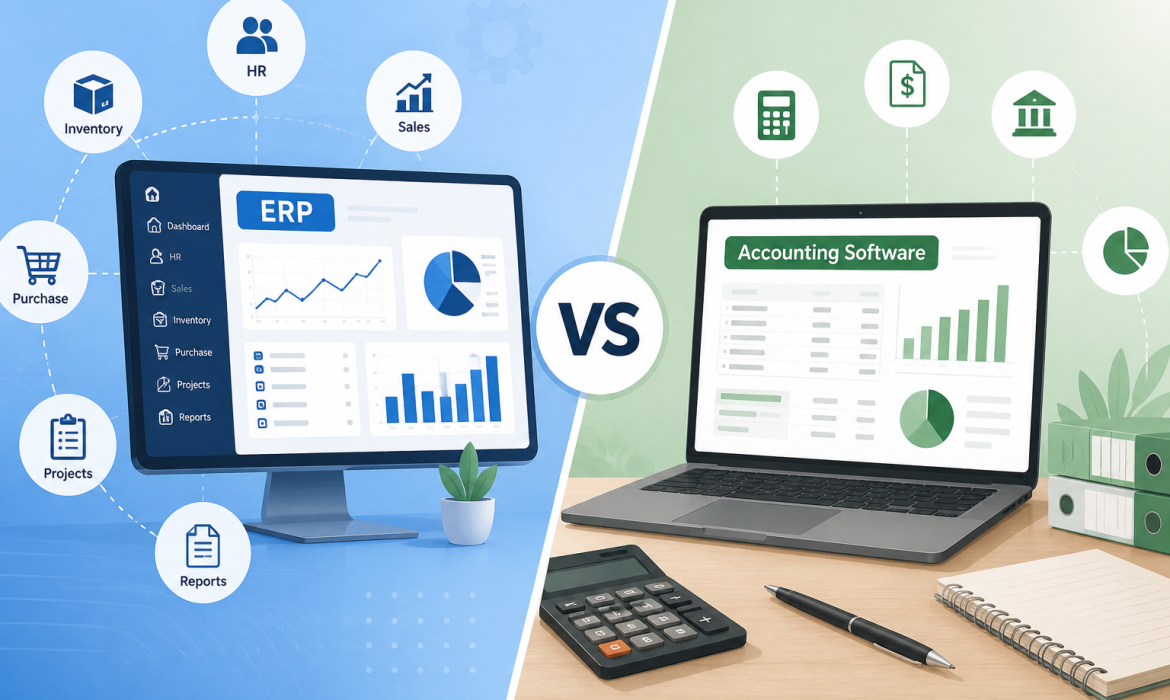
Although ERP and accounting software may seem similear, they are designed for different business need. In this blog, we will explain the main differences between ERP and accounting online system and help you understand which option may be best for your business.
What is Accounting Software?
Accounting software is mainly designed to manage a company’s financial activities. It helps businesses keep track of money coming in and going out and makes everyday accounting tasks easier.
Common features of accounting software include:
- Recording income and expenses
- Creating invoices and bills
- Managing accounts payable and receivable
- Tracking business transactions
- Preparing financial reports
- Managing taxes
- Monitoring cash flow
- Maintaining financial records
For small businesses and companies with straightforward financial operations, accounting software can be a practical and affordable choice.
What is ERP Software?
ERP software is a broader business management system that connects multiple departments and processes through one online platform.
Instead of focusing only on financial process, an ERP system can manage different parts of a business, including:
- Finance and accounting
- Sales and customer management
- Inventory management
- Purchasing
- Human resources
- Payroll
- Manufacturing
- Supply chain management
- Business reporting
The biggest advantage of ERP software is that different departments can work with shared business data instead of maintaining separate systems.
ERP vs Accounting Software: Key Differences
1. Main Purpose
The big difference between the two is their main purpose.
Accounting software main focuses mainly on financial manag. It work businesses handle accounting records, invoices, expenses, payments and financial reports.
ERP software is designed to manage the business as a whole. Accounting is one part of the software, along with sales, inventory, HR, purchasing and other business operations.
2. Business Functions
Accounting software generally covers financial tasks such as:
- Invoicing
- Expenses
- Payments
- Tax management
- Financial reporting
ERP software covers a much wider range of business functions. It can connect finance with inventory, sales, purchasing, HR, production, and other departments.
This makes ERP more suitable for businesses with complex operations.
3. Data Management
With accounting software, financial information is usually the main focus.
An ERP system brings information from different departments into one centralized system. For example, when a sales order is created, the system can update inventory and financial information based on the business process.
This reduces the need for employees to enter the same information into different systems.
4. Scalability
Accounting software can work very well for startups and small businesses. However, companies with growing operations may eventually need more features and better integration.
ERP software is generally built to support larger and more complex business processes. It can grow with the organization as new departments, employees, products, branches, and processes are added.
5. Integration
Accounting software may offer integrations with other applications, but its primary purpose remains financial management.
ERP software is built around integration. Different departments can work together using connected data and shared workflows.
For example, a purchase order can be connected with inventory, supplier information, accounts payable, and financial reporting.
6. Reporting and Business Insights
Accounting software provides important financial reports, such as profit and loss statements, balance sheets, and cash flow reports.
ERP software can provide both financial and operational reports. Businesses can use these daily reports to understand sales performance, offer, purchasing activities, employee details and overall business performance work.
This can help management make better decisions.
Benefits of Accounting Software
Accounting software can be a good choice for businesses that mainly need financial management.
Some important benefits include:
Easy Financial Management
It makes everyday accounting tasks easier by keeping financial information organized in one system.
Saves Time
Automated calculations, invoices, reports, and payment records can reduce manual work.
Better Financial Accuracy
Using software can reduce common errors that may happen when financial records are maintained manually.
Affordable for Small Businesses
Many accounting solutions are designed for small businesses and offer the essential features needed to manage finances without the complexity of a complete ERP system.
Simple Financial Reporting
Businesses can quickly generate reports to understand their income, expenses, payments, and overall financial position.
Benefits of ERP Software
ERP software provides a wider range of benefits for businesses with multiple departments and complex processes.
One Centralized System
Different departments can access relevant information from the same system, helping keep business data organized.
Improved Team Collaboration
When departments share connected details, employees can work together more efficiently and avoid unnecessary communication.
Better Inventory Control
ERP software can help businesses monitor stock levels, purchases and product movement in orignal time.
Reduced Manual Work
Automated workflows can less repetitive database entry and help employees spend more time on more business activities.
Better Business Decisions
ERP daily reports can combine details from different areas of the business, giving management a clearer view of overall work performance.
Supports Business Growth
As a company grow fast, ERP software can work manage additional employees, products, branches and business.
When Should You Choose Accounting Software?
Accounting software may be the better option if your business:
- Mainly needs financial and accounting management
- Has simple business processes
- Has a small number of departments
- Does not require advanced inventory or HR management
- Wants an easy-to-use financial solution
- Has a limited software budget
For a small business that primarily needs invoicing, expense tracking, tax management, and financial reports, accounting software may provide everything needed.
When Should You Choose ERP Software?
ERP software may be a better choice if your business:
- Has multiple departments
- Needs inventory and purchasing management
- Has complex business operations
- Needs centralized business data
- Has multiple branches or locations
- Wants to automate business workflows
- Needs detailed operational and financial reports
- Is planning for long-term growth
An ERP system can be especially useful when different part need to work together and share the same business details.
ERP vs Accounting Software: Which One is Better?
There is no single answer because the right choice depends on the size and requirements of your business.
If your main requirement is managing finances, accounting software may be enough. It can provide essential accounting features without adding unnecessary complexity.
On the other hand, if you want to manage all finance along with sales product and other business operations, an ERP software can provide a more solution.
The target should not be to select the software with the most features. Instead, businesses should choose a full solution that matches their current needs.
Tips for Choosing the Right Business Software
Before select ERP or accounting system, consider the following points:
Understand Your Requirements: Make a list of the business process step you want to all manage.
Consider Future Growth: Choose online software that can support your business as it more expands.
Check Integration Options: Make sure the online system can connect with the all tools your business.
Compare Features: Look at the features that are actually real work for your business.
Consider Ease of Use: Employees should be able to learn new and use the system more comfortab.
Check Security: Business and financial inform should be protected with complate security measures.
Review Support: Reliable technical support can be important when problems arise.
Conclusion
ERP and accounting software both help businesses manage in operation, but they serve different target. Accounting software main all focuses on financial management, while ERP software connects with other areas of the business.
For small businesses with basic accounting need, accounting software can be a useful choice. For growing businesses that need to manage multiple departments and connected long processes, ERP software can provide a more full solution.
At Scrupulous Technology, we help businesses select and implement technology solutions based on their specific need. Whether you need ERP solutions, CRM development or other business software, the best technology can make daily operations easy and support long-time grow.